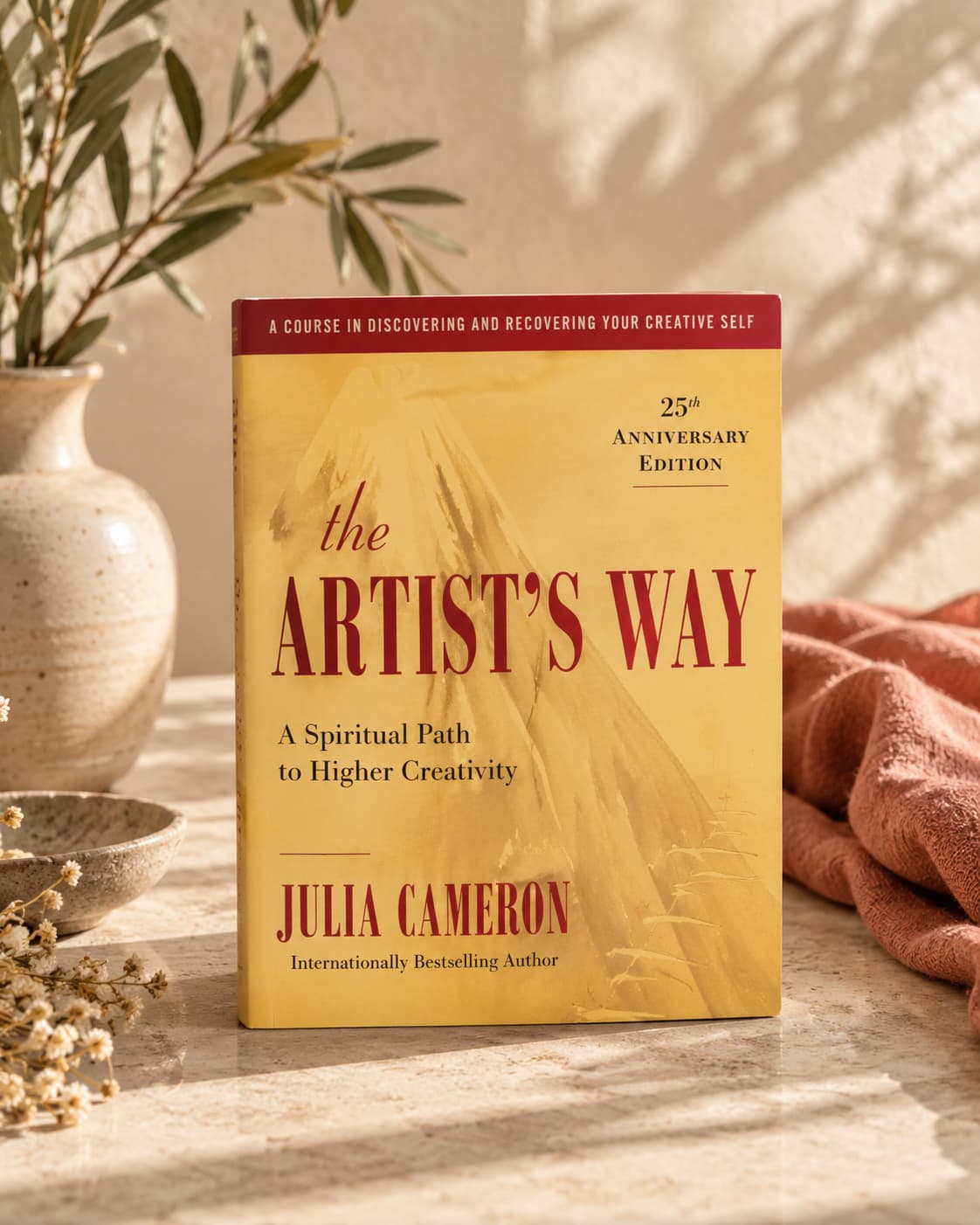
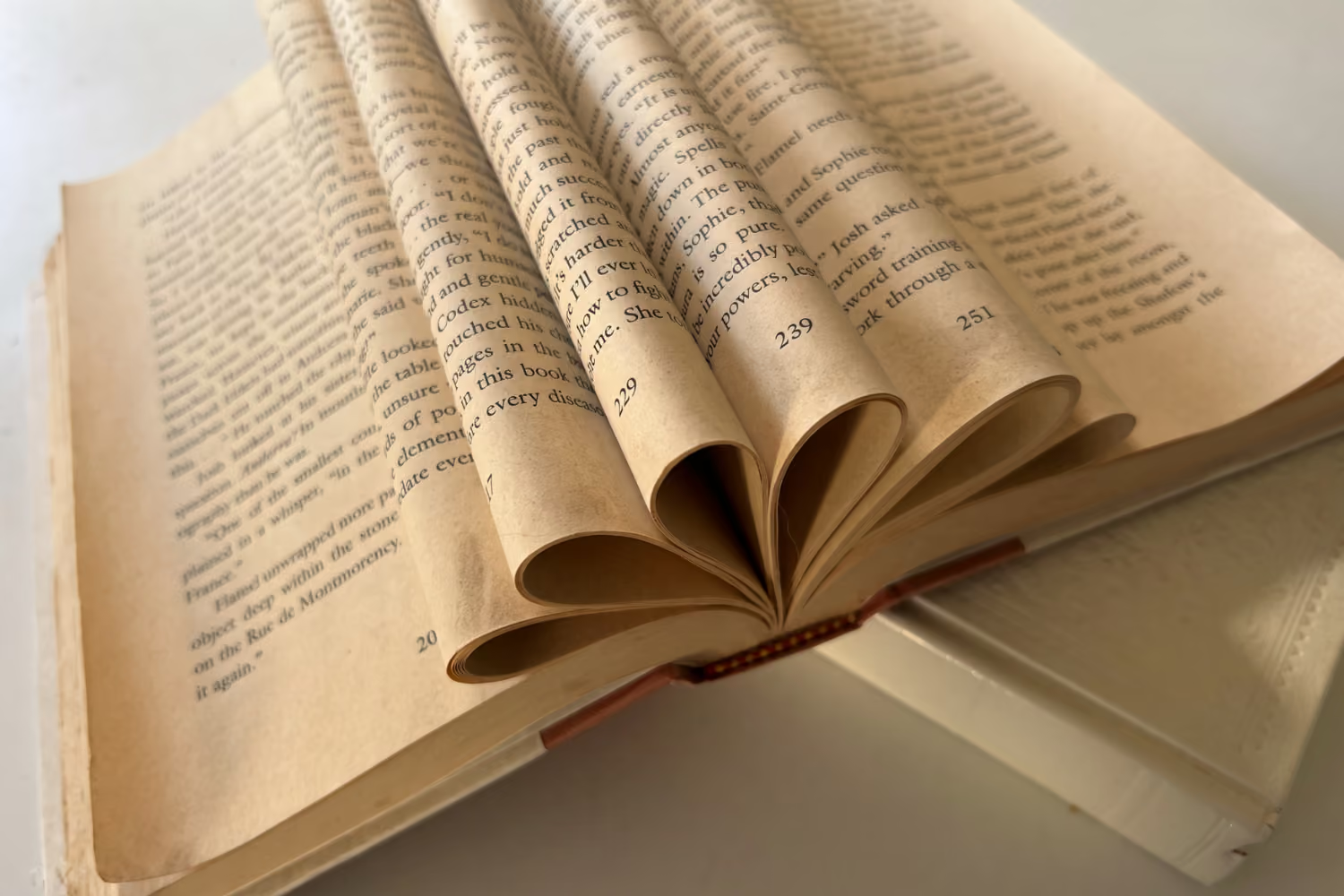
The Artist’s Way by Julia Cameron is a twelve-week guide to reconnecting with creativity. Despite the title, it isn’t really just for artists. It is about recognizing the ways curiosity, play, intuition, and self-expression can slowly get pushed aside by responsibility, expectation, and the belief that we need to be good at something before we are allowed to enjoy it.
Through writing exercises, creative prompts, Morning Pages, Artist Dates, and other small practices, the book encourages you to notice what interests you, what you miss, and what you may have stopped allowing yourself to want. It is less about becoming more artistic and more about clearing away some of the noise that makes it difficult to hear yourself.
I originally worked through The Artist’s Way because I wanted to regain a part of my creativity that I had stopped making room for. I love to paint, but for a long time I wouldn’t because I didn’t really know how. Somewhere along the way, not knowing how became a reason not to begin. The book helped loosen that. It gave me permission to make something without needing it to be good, useful, or worthy of showing anyone.
The Morning Papers also gave me somewhere to put the frustrations and repetitive thoughts that would otherwise circle in my head all day. Sometimes I would write them down, tear up the page, and throw it away — not because those thoughts weren’t real, but because they weren’t helpful to keep carrying.
Over time, the practices helped me feel lighter, more creative, and more willing to follow an impulse. Today, I return to it for little nuggets — an exercise, a prompt, or an idea that gives me something small to explore.
What I love most about The Artist’s Way is the way it separates creativity from accomplishment. You don’t have to know how to paint before you paint. You don’t need to be a writer to fill a page. You don’t need a plan for where an interest will lead before you follow it. It sounds simple, but it can be surprisingly difficult. So much of adult life teaches us to measure things by usefulness, productivity, or whether we are good at them. This book gently pushes in the opposite direction.
For me, that was the real gift of the book: not teaching me how to be creative, but helping me remember that I already was.


A breath, a pause, a practice. DearKali invites you to explore what supports you, question what no longer fits, and make space for the life you want to live.
Start Here.avif)

%401x.svg)



.avif)